
The short answer
After a storm, stay safe first: keep clear of the area below any loose tiles or a damaged chimney and do not go on the roof. Take photos from the ground, contact your insurer to check what your policy covers, and arrange a temporary cover if water is getting in. The damage storms usually cause is loose ridge tiles, slipped or missing tiles, lifted flashing and torn felt or flat roof membranes.
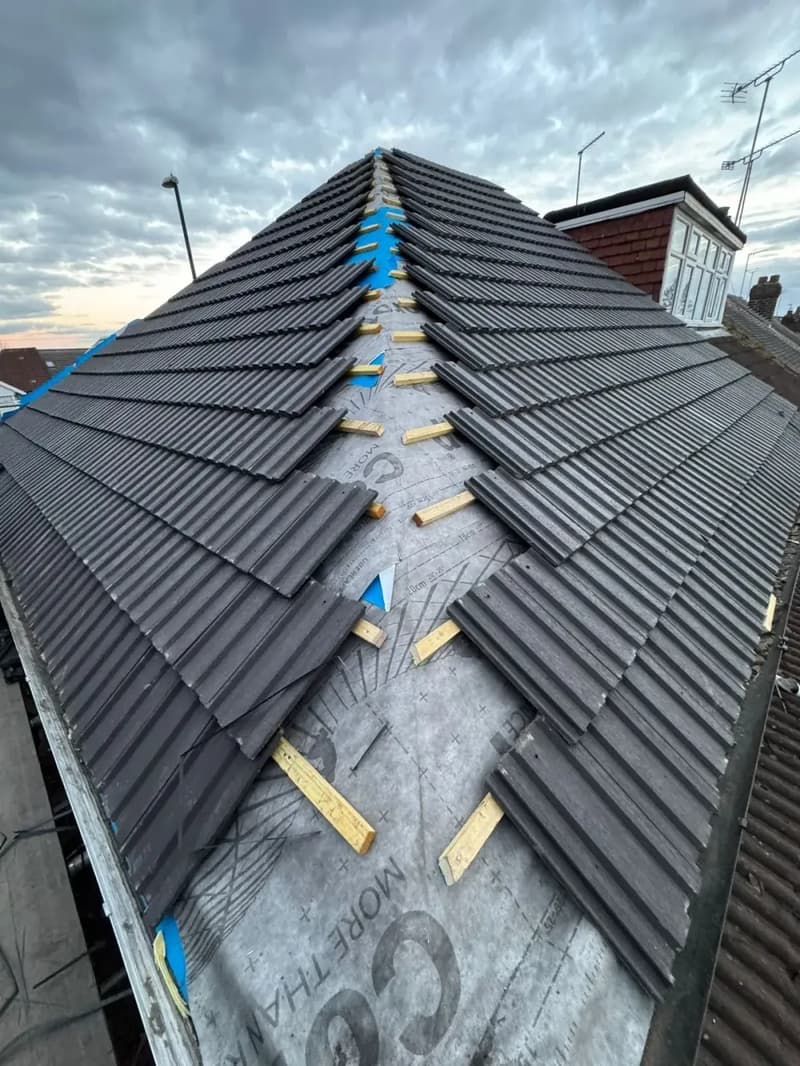
Safety first
Roofs are dangerous after a storm, and loose tiles can keep falling for days. Keep children, pets and cars away from below damaged sections. If a chimney is leaning or bricks have fallen, keep well clear and tell your neighbours if it is a shared stack. Do not climb a ladder in wind or rain. If water is reaching electrics inside, turn off that circuit.
Record the damage
Photos make every next step easier. Take wide shots that show the whole roof from the street and the garden, then closer shots of missing tiles, bent gutters and anything on the ground. Inside, photograph stains, wet ceilings and the loft if it is safe to look. Note the date and time of the storm. Keep pieces of fallen tile or ridge, as they help show what came off.
Talk to your insurer
Many home insurance policies include storm damage, but the definitions, excesses and exclusions vary, so check your own policy wording or call your insurer before any permanent repair. Insurers commonly distinguish between damage caused by a storm and wear that a storm simply exposed, such as old mortar or perished felt. Ask whether they need a report or quote from a roofer and whether you can go ahead with temporary work to stop further damage.
Temporary cover
If rain can get in, a temporary measure such as a secured tarpaulin or refixing a few tiles can protect the inside of the house until a full repair is arranged. This should be done by someone with safe access, not from a ladder in poor weather. Keep receipts and photos of what was done for your insurer.
Before the next storm
Most storm damage happens to roofs that already had a weak point: an old mortar ridge, a few slipped tiles or lead that had started to lift. A check after the worst of the winter weather, or before it, can catch those faults while they are still small. Securing loose ridges with mechanical fixings, clipping tiles at the verges and clearing gutters so water can get away all make a roof less likely to suffer the next time the wind gets up.
Typical storm damage
These are the faults storms most often cause or reveal:
- Ridge and hip tiles: old mortar lets go and tiles rock, slide or fall.
- Tiles and slates: wind lifts them, snapping nails or clips, and leaves gaps.
- Verges: mortar along gable ends breaks away.
- Flashing: lead at chimneys and walls can be lifted or peeled back.
- Felt and membranes: exposed underlay can tear, and flat roof coverings can lift at edges.
- Roof blown off: in severe cases whole sections of covering or a flat roof can be lifted off; keep well clear and get professional help.
Spotting damage from the ground
Stand back from the house with binoculars or a phone camera on zoom. Look along the ridge for gaps or tiles out of line, at the slopes for light-coloured patches where a tile is missing, and at the chimney for lead that stands away from the brick. Check the gutters and ground for pieces of tile or mortar. In the loft, daylight through the roof or damp patches on the felt after rain are signs worth acting on. For faults that keep coming back after storms, our slipped roof tiles guide explains why.
Need it sorted? Book a storm damage roof repair
Our roof repairs team repairs ridges, tiles, flashings and felt after storms. If water is coming in now, see emergency roof repairs. Request a quote.
Get a quoteWant a professional to handle it?
Frequently asked questions
Does home insurance usually cover storm damage?
Many policies include it, but terms, excesses and exclusions differ, and wear and tear is usually excluded. Check your own policy wording or ask your insurer before permanent repairs.
How can I spot storm damage from the ground?
Use binoculars or a zoomed photo to look for gaps along the ridge, missing or slipped tiles, lifted lead at the chimney and pieces of tile or mortar in the gutters or on the ground.
Should I go on the roof to check?
No. Roofs are slippery and loose tiles can move under you. Look from the ground and from the loft, and leave the roof itself to someone with safe access.
Related services
Covering Staines, Surrey and West London.
More guides
- What does a flat roof replacement cost?
- GRP vs rubber (EPDM) vs felt: which flat roof is best?
- Why is my roof leaking? Common causes and fixes
- How long does a new roof take?
- Dry ridge vs mortar ridge: which is better?
- How much does a new roof cost?
- What does guttering and fascia replacement cost?
- What affects the cost of a roof repair?
- Why is my flat roof leaking?
- Felt roof repair
- Slipped and broken roof tiles
- How much do chimney repairs cost?
- How long does a flat roof last?
- Roof valley repair
- Chimney Leaking? Causes and Fixes
- Do You Need Planning Permission for a New Roof?
- Sagging Roof: Causes and What to Do
- Roof tile types: concrete, clay and slate compared
- Condensation in the loft: causes and fixes
- Garage roof replacement cost: what drives the price
- Rubber roof cost: what decides the price of EPDM
- How long does a roof last?
- Water coming through the ceiling: roof, pipe or condensation?
- Breathable roof membrane or traditional felt: roof underlay explained
- Is moss bad for my roof? When roof moss matters
- Asbestos garage roof removal cost: what affects the price
- GRP roof cost: what decides the price of a fibreglass roof
- Chimney removal cost: what changes the price
- Gutter overflowing? Causes and how to fix it
- Roof tile replacement cost: what affects the price
- Slate roof cost: what decides the price
- Lead flashing cost: what decides the price
- Flat roof ponding: why water sits and what to do
- Flat roof blistering: causes and when to repair
- Can you claim roof repairs on insurance?
- Felt roof cost: what affects the price