
The short answer
A chimney that leaks after rain may have a fault at the roof junction, weathered mortar, cracked flaunching or an open pot admitting water. Damp on the breast can also come from condensation inside a disused flue. The useful first step is to establish when the moisture appears and where it starts, rather than assuming every stain needs new flashing.
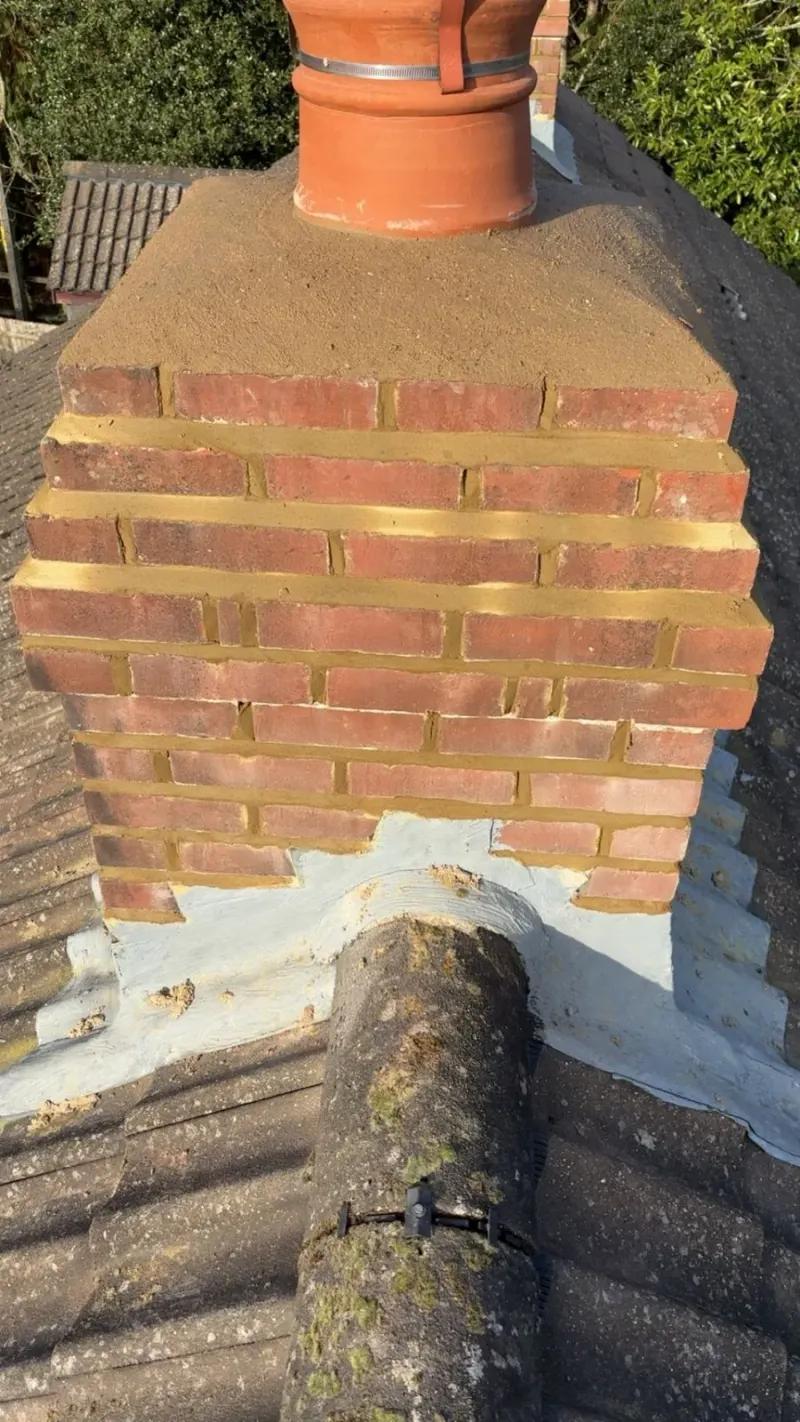
Chimney leak, roof leak or condensation?
Watch what happens during different weather. A patch that darkens after rainfall points towards water entering from outside. Wind direction can matter: rain driven against one face of the stack may expose a defect that stays dry in calmer conditions. Take dated photographs indoors so changes are easier to compare.
In the loft, water near the chimney may be coming through the junction with the roof, but it can run along a rafter from a damaged tile further uphill. Look only from a safely accessible position. Do not step between ceiling joists or climb onto the roof to follow a drip.
Condensation is more likely where moisture appears during cold weather without a clear connection to rain. Several causes can exist together. An old chimney breast may also contain salts that attract moisture, so a damp reading alone does not identify the route or prove that the roof is leaking.
Lead flashing, soakers and back gutters
Flashing overlaps the roof covering and turns into a joint in the stack. Soakers sit beneath individual tiles or slates along the sides, directing water back onto the roof. Behind the chimney, a back gutter collects rain from the uphill slope and takes it around the obstruction.
A split, loose fixing or open joint can let rain behind these details. Debris trapped in the back gutter can obstruct drainage even when the visible lead looks tidy. Smearing sealant across the surface may conceal the opening without putting the overlaps or water path right.
The appropriate repair depends on the lead's condition and how it was formed. Sound material with an isolated defect is different from badly cracked or incorrectly arranged flashing. Our leadwork page covers repair and replacement at roof junctions; the quotation should identify which parts need attention.
Mortar joints and porous brickwork
Mortar between the bricks can weather away, leaving recesses where driven rain collects. Cracked joints allow moisture to enter deeper into the stack. Some bricks absorb rain through their faces, particularly where the surface has deteriorated, so repointing is not automatically the answer to every damp chimney.
Repointing replaces defective joint mortar with a suitable material. It does not mend split lead or stop rain falling down an open flue. The brick faces, joints and roof junction need considering together before choosing work. Read about chimney work and repointing if the masonry around your stack looks worn.
Flaunching and uncapped pots
Flaunching is the shaped mortar around the pots at the top of the chimney. Its surface should shed water away from the openings. Cracks, loose sections or a poorly formed surface can hold rain and allow it to penetrate around the base of a pot.
An uncovered opening is another possible route. A suitable terminal needs to suit the flue's actual use, not simply cover the hole. A working fireplace or appliance has ventilation and combustion requirements that must not be obstructed. Confirm whether a flue is active before anyone alters its pot or terminal.
Damp after a fireplace has been blocked
Closing a fireplace changes airflow through the chimney. If the flue is sealed without suitable ventilation, warm moisture from the house may collect against cold surfaces. Damp can then develop even after external roofing defects have been repaired. Fresh plaster or paint does not resolve that moisture source.
Explain whether the fireplace has been closed, when it happened and whether vents remain open. Ventilation arrangements should be considered alongside rain entry, rather than treating the whole problem as a roofing repair. Do not block an existing vent or seal the chimney top as a trial fix.
Getting the cause looked at
Useful information includes which room is affected, whether the stain changes after rain and whether the fireplace is used. Photos taken from the ground can show the stack and neighbouring roof without putting you at height. Access arrangements depend on the position of the chimney and the work being considered.
Rayner's Roofing is based in Staines and carries out chimney work, leadwork and roof repairs across Staines, Surrey and West London. We provide repair-or-replace advice and a written quotation before work starts. The chimney repair cost guide explains what affects the scope; contact us to discuss the damp you have noticed.
Want a professional to handle it?
Frequently asked questions
Why is my chimney breast damp after rain?
Rain can enter at the flashing, through defective masonry or around the chimney top. Its path may not line up with the indoor patch. Record when the patch changes so the roof junction and stack can be considered together.
Can lead flashing be repaired rather than replaced?
An isolated fault in otherwise sound lead may allow a local repair. Widespread splitting or an unsuitable arrangement may call for replacement. The written quotation should distinguish the proposed repair from any new leadwork.
Does repointing stop a chimney leaking?
It can address rain entering through worn mortar joints, but not a separate flashing or pot defect. Establishing which parts admit water avoids choosing masonry work for a problem elsewhere.
Should a disused chimney pot be capped?
A disused flue may need a ventilated terminal that limits rain entry while allowing airflow. First confirm its use and ventilation needs; a completely sealed cap can leave moisture trapped inside.
Can you look at the chimney without scaffolding?
Ground-level views can help establish what needs closer attention, but they cannot reveal every joint or surface. Safe access depends on height, position and the proposed work. Check the access arrangements in the written quotation.
Related services
Covering Staines, Surrey and West London.
More guides
- What does a flat roof replacement cost?
- GRP vs rubber (EPDM) vs felt: which flat roof is best?
- Why is my roof leaking? Common causes and fixes
- How long does a new roof take?
- Dry ridge vs mortar ridge: which is better?
- How much does a new roof cost?
- What does guttering and fascia replacement cost?
- What affects the cost of a roof repair?
- Why is my flat roof leaking?
- Felt roof repair
- Slipped and broken roof tiles
- How much do chimney repairs cost?
- How long does a flat roof last?
- Roof valley repair
- Do You Need Planning Permission for a New Roof?
- Sagging Roof: Causes and What to Do
- Roof tile types: concrete, clay and slate compared
- Condensation in the loft: causes and fixes
- Garage roof replacement cost: what drives the price
- Rubber roof cost: what decides the price of EPDM
- How long does a roof last?
- Water coming through the ceiling: roof, pipe or condensation?
- Storm damage to a roof: what to do next
- Breathable roof membrane or traditional felt: roof underlay explained
- Is moss bad for my roof? When roof moss matters
- Asbestos garage roof removal cost: what affects the price
- GRP roof cost: what decides the price of a fibreglass roof
- Chimney removal cost: what changes the price
- Gutter overflowing? Causes and how to fix it
- Roof tile replacement cost: what affects the price
- Slate roof cost: what decides the price
- Lead flashing cost: what decides the price
- Flat roof ponding: why water sits and what to do
- Flat roof blistering: causes and when to repair
- Can you claim roof repairs on insurance?
- Felt roof cost: what affects the price