
The short answer
A gutter overflowing is usually caused by a blockage: leaves, moss or silt in the run or the outlet. If the gutter is clear and still overflows, the cause is normally a lost fall so water sits instead of draining, sagging or broken brackets, a blocked downpipe, or a gutter too small for the roof it serves. Watching where and when it spills tells you which.
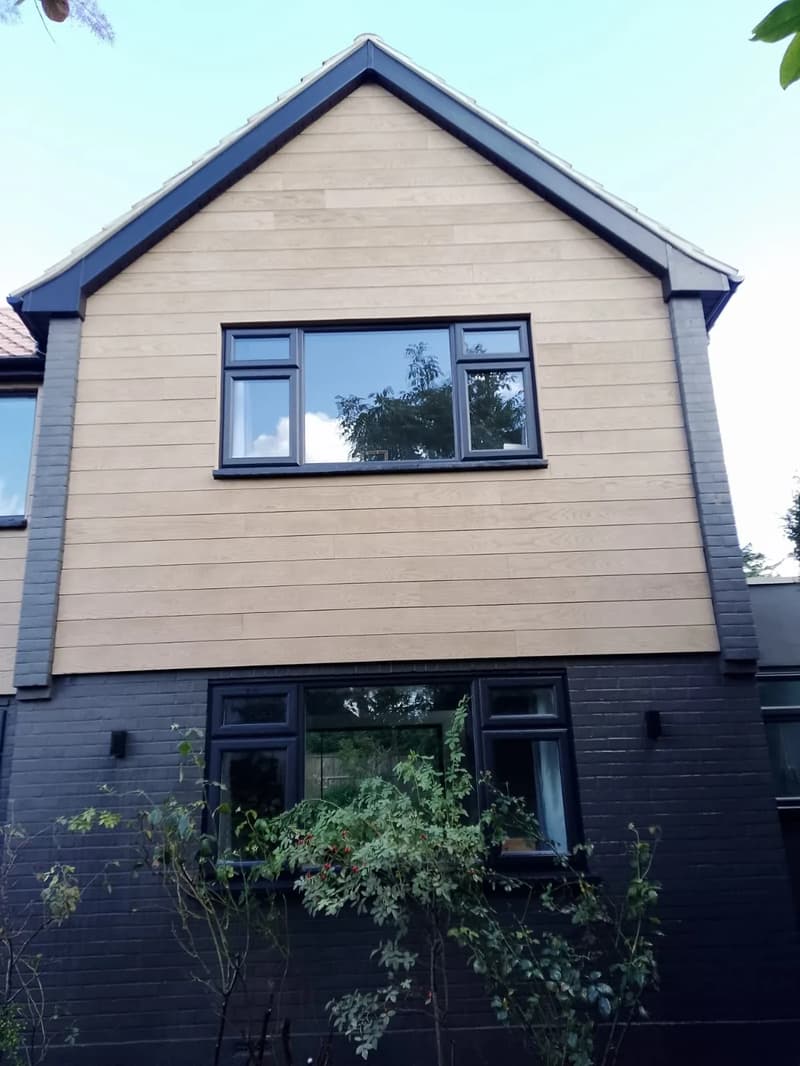
Read where the water spills
Stand outside during heavy rain, or run a hose on the roof, and watch. Water spilling over the front edge along the whole run points to a full gutter or a downpipe that cannot take the flow. Spilling at one point, often midway, suggests a dip where a bracket has dropped. Water pouring at a corner may be a blocked outlet or a joint that has parted, and water running behind the gutter down the wall points to a fascia or felt problem at the eaves.
Common causes
In rough order of how often they turn up:
- Leaves, moss and tile grit packed into the run, especially below trees or a moss-covered slope.
- A blocked outlet or downpipe, often a ball of debris at a bend or at the swan neck under the eaves.
- Lost fall: gutters need a slight slope towards the outlet; once brackets move, water collects at the low point.
- Sagging or snapped brackets, or brackets spaced too far apart, letting the gutter bow under load.
- Failed rubber seals at joints and unions, which drip rather than overflow but are often confused with it.
- An undersized gutter or too few downpipes for a large or steep roof area, which cannot cope with a downpour.
- Water from an upper roof shooting off a short downpipe or valley and overshooting the gutter below.
What you can safely check
From the ground, look along the gutter for plants growing out of it, sagging sections and staining on the wall. Check the base of downpipes and gullies for blockages you can reach. If there is a flat roof or a window you can safely see from, check the outlets. Avoid leaning a ladder against plastic guttering, which can crack it, and avoid working at height alone.
If a gutter needs clearing on an upper storey, it is a job for someone with the right access equipment.
Matching the fix to the cause
A blockage is fixed by clearing the run and outlets and flushing the downpipes; our gutter cleaning service covers that. A lost fall or sagging section is fixed by resetting or adding brackets and remaking joints, which is the work on our gutter repairs page. If the gutter is brittle, cracked in several places, the wrong size or fixed to a rotten fascia, renewing it is usually better value; see gutter replacement.
Persistent overflow from moss is worth tackling at the source as well. Our is moss bad for my roof guide explains when the growth on the slope is worth removing.
Why it is worth acting on
Water spilling over a gutter soaks the wall below, which can lead to damp patches inside, damaged render or pointing and green staining. At ground level it can saturate the soil next to foundations or splash back onto the base of the wall. Behind the gutter, it rots the fascia boards and the rafter ends they cover. A small, regular overflow is cheap to sort out compared with the repairs it can lead to if left for a few winters.
Need it sorted? Book gutter cleaning or repairs
Clearing blockages is covered by gutter cleaning, and dropped sections or leaking joints by gutter repairs. Request a quote and let us know where the water spills.
Get a quoteWant a professional to handle it?
Frequently asked questions
Why does my gutter overflow only in heavy rain?
Often a partial blockage or a gutter or downpipe that is too small for the roof. Light rain drains, but a downpour exceeds what the outlet can take.
Why is my gutter overflowing when it is not blocked?
Check the fall and the brackets. A section that has dropped holds water, and a downpipe blocked lower down backs up into a clear gutter.
Can I fix an overflowing gutter myself?
Clearing a downpipe at ground level is often manageable. Working on gutters at height needs proper access equipment and is best left to someone used to it.
Related services
Covering Staines, Surrey and West London.
More guides
- What does a flat roof replacement cost?
- GRP vs rubber (EPDM) vs felt: which flat roof is best?
- Why is my roof leaking? Common causes and fixes
- How long does a new roof take?
- Dry ridge vs mortar ridge: which is better?
- How much does a new roof cost?
- What does guttering and fascia replacement cost?
- What affects the cost of a roof repair?
- Why is my flat roof leaking?
- Felt roof repair
- Slipped and broken roof tiles
- How much do chimney repairs cost?
- How long does a flat roof last?
- Roof valley repair
- Chimney Leaking? Causes and Fixes
- Do You Need Planning Permission for a New Roof?
- Sagging Roof: Causes and What to Do
- Roof tile types: concrete, clay and slate compared
- Condensation in the loft: causes and fixes
- Garage roof replacement cost: what drives the price
- Rubber roof cost: what decides the price of EPDM
- How long does a roof last?
- Water coming through the ceiling: roof, pipe or condensation?
- Storm damage to a roof: what to do next
- Breathable roof membrane or traditional felt: roof underlay explained
- Is moss bad for my roof? When roof moss matters
- Asbestos garage roof removal cost: what affects the price
- GRP roof cost: what decides the price of a fibreglass roof
- Chimney removal cost: what changes the price
- Roof tile replacement cost: what affects the price
- Slate roof cost: what decides the price
- Lead flashing cost: what decides the price
- Flat roof ponding: why water sits and what to do
- Flat roof blistering: causes and when to repair
- Can you claim roof repairs on insurance?
- Felt roof cost: what affects the price