
The short answer
Felt roof cost is set by the area of the roof, the felt system and number of layers, whether the deck under the old covering is sound, whether insulation is being added, the upstands, outlets and edge details, and how easily the old material can be removed and new rolls delivered. Modern torch-on systems are built up in layers, so labour as well as material scales with the area.
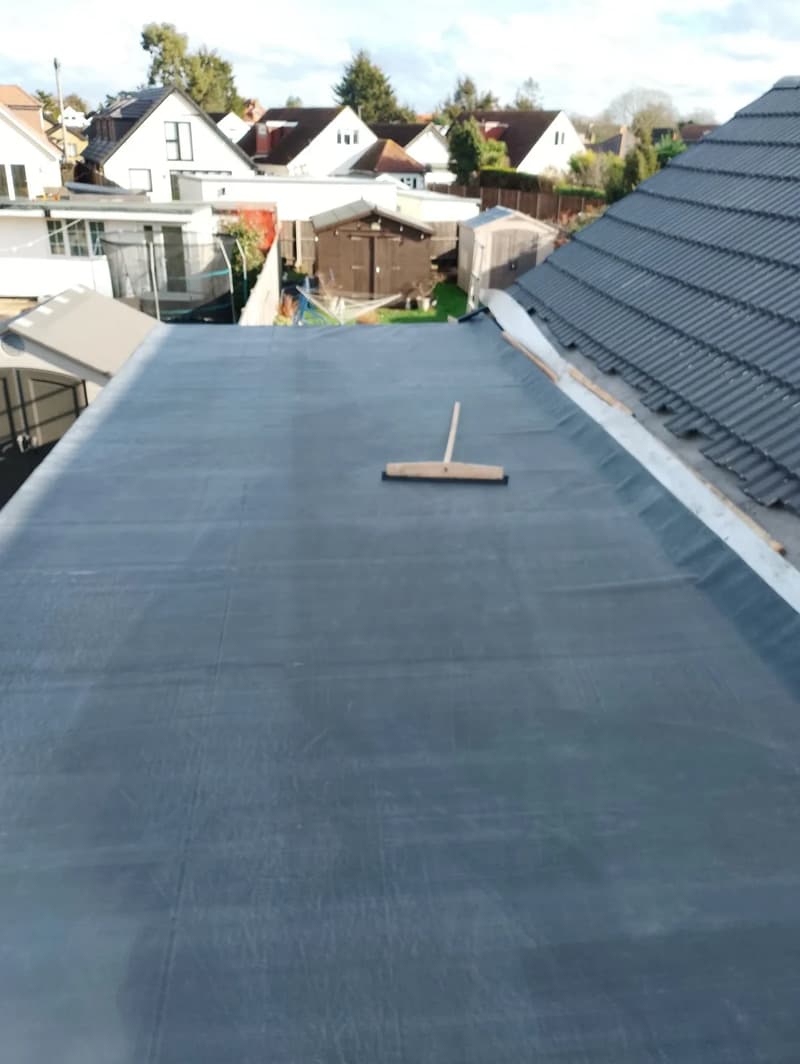
How a modern felt roof is built
Today's felt roofs are usually high-performance torch-on systems. After stripping the old covering and checking the deck, a base layer is bonded down, followed by a cap sheet with a mineral surface that protects it from sunlight. Each sheet is heated with a torch so its underside melts and bonds to the layer below. Laps, upstands and edges are sealed in the same way.
Older felt roofs were often a single layer, or several layers bonded with hot bitumen and finished with chippings, which is part of why many failed early. The felt roof price for a modern system reflects more layers and better material.
What moves the price
Expect a quote to reflect:
- Area and shape: simple rectangles are quicker to cover than roofs with corners, dormers or several levels.
- System: the number of layers and the grade of base and cap sheet chosen.
- Strip-off: removing old felt, chippings and any previous overlays, and taking the waste away.
- Deck: replacing soft or rotten boards, or the whole deck, before new felt goes down.
- Insulation: building a warm roof adds boards, a vapour control layer and raises the edge height.
- Details: upstands against walls, lead or felt flashings, outlets, rooflights and pipes.
- Edges: new drip trims, verge trims or timber fascias at the roof edge.
- Access and fire safety: confined areas near windows or timber may need extra care around the torch.
Repairing felt or replacing it
A sound felt roof with a single split, a lifted lap or a cracked blister can often be patched. Our felt roof repair guide explains when a patch makes sense. Replacement becomes better value when there are repeated leaks in different places, widespread cracking or blistering, or soft decking. The cost of felt roof replacement then needs comparing with other coverings over the years you expect it to last, not only on day one.
Felt compared with rubber and fibreglass
Felt, EPDM rubber and GRP fibreglass all suit domestic flat roofs. Felt is familiar, repairable and can be laid in most weather. Rubber goes on as a single sheet with few joints; fibreglass cures to a hard seamless surface. Each has different labour, detailing and expected life. The EPDM, GRP and felt comparison sets out how they differ in use, which helps put felt quotes in context.
Getting a fair quote
A clear quotation for a felt roof will name the system and number of layers, say whether the deck is being replaced or overboarded, include any insulation, and list edge trims and flashings. If two quotes differ widely, these are the places to look first. A roofer seeing the deck from below, where possible, will give a far more accurate figure than one estimated from a photo.
Timing and weather
Torch-on felt can be laid in most seasons, but rain, frost and strong wind still halt work, because the deck must be dry and the torch controlled. Booking ahead of autumn gives the most flexibility, and roofs over bedrooms or kitchens are often scheduled so the house is weathertight each night.
Need it sorted? Book torch-on felt roofing
See how layered felt systems are laid on our torch-on felt roofing page, then request a quote and we will check the deck before quoting.
Get a quoteWant a professional to handle it?
Frequently asked questions
What affects felt roof cost the most?
Usually the deck and the details rather than the felt itself: replacing boards, adding insulation and forming upstands, outlets and edges all take time.
Is a felt roof cheaper than rubber or fibreglass?
It depends on the roof. Simple roofs, complex roofs and the system chosen all change the comparison, so compare quotes for the same roof and details.
Can new felt go over the old felt?
Overlaying is sometimes possible, but stripping allows the deck to be checked and is usually the better approach for a lasting roof.
How long does a new felt roof take to lay?
It depends on the area, deck repairs and detailing. Most domestic roofs are planned so the covering is weathertight by the end of each working day.
Related services
Covering Staines, Surrey and West London.
More guides
- What does a flat roof replacement cost?
- GRP vs rubber (EPDM) vs felt: which flat roof is best?
- Why is my roof leaking? Common causes and fixes
- How long does a new roof take?
- Dry ridge vs mortar ridge: which is better?
- How much does a new roof cost?
- What does guttering and fascia replacement cost?
- What affects the cost of a roof repair?
- Why is my flat roof leaking?
- Felt roof repair
- Slipped and broken roof tiles
- How much do chimney repairs cost?
- How long does a flat roof last?
- Roof valley repair
- Chimney Leaking? Causes and Fixes
- Do You Need Planning Permission for a New Roof?
- Sagging Roof: Causes and What to Do
- Roof tile types: concrete, clay and slate compared
- Condensation in the loft: causes and fixes
- Garage roof replacement cost: what drives the price
- Rubber roof cost: what decides the price of EPDM
- How long does a roof last?
- Water coming through the ceiling: roof, pipe or condensation?
- Storm damage to a roof: what to do next
- Breathable roof membrane or traditional felt: roof underlay explained
- Is moss bad for my roof? When roof moss matters
- Asbestos garage roof removal cost: what affects the price
- GRP roof cost: what decides the price of a fibreglass roof
- Chimney removal cost: what changes the price
- Gutter overflowing? Causes and how to fix it
- Roof tile replacement cost: what affects the price
- Slate roof cost: what decides the price
- Lead flashing cost: what decides the price
- Flat roof ponding: why water sits and what to do
- Flat roof blistering: causes and when to repair
- Can you claim roof repairs on insurance?