
The short answer
How long a roof lasts depends less on the tiles than on everything holding them: the fixings, battens and underlay, plus the flashings and ridges. Tiles and slates often outlive the layers beneath them, while flat coverings such as felt, EPDM and GRP depend heavily on installation quality. Regular maintenance and early repairs are what stretch a roof's life the most.
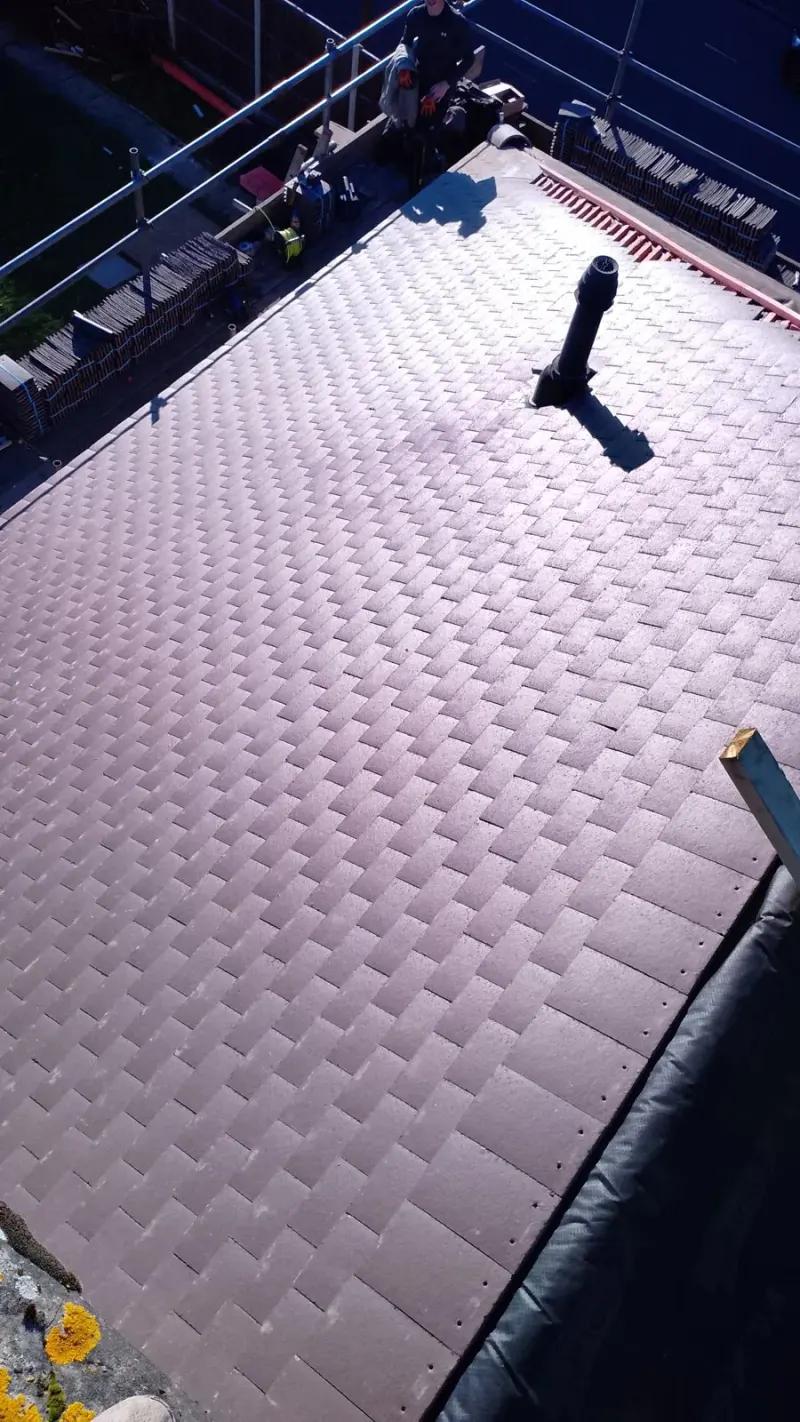
A roof is several parts that age differently
A pitched roof is a stack of layers: rafters, underlay, battens, the tiles or slates, and the mortar, lead and trims at its edges. Each has its own working life. Mortar on ridges and verges is often the first thing to go; lead can last a long time if it was sized and fixed properly; old bitumen felt becomes brittle; battens rot if water reaches them. The roof is only as sound as its weakest layer, which is why the question has no single answer.
Lifespan factors by covering
Without promising numbers of years, these are the things that decide how long each covering keeps working:
- Concrete tiles: the tile body is durable but the surface wears and gathers moss; underlay and ridge mortar usually fail first.
- Clay tiles: colour and body last well; frost damage in exposed spots and failed nails are the usual problems.
- Slate: good natural slate lasts a very long time, but nail corrosion causes slipping long before the slate wears out.
- Felt: depends on the number of layers, the surface protection and whether it was laid on a sound deck with a proper fall.
- EPDM: life depends on the bonding, the edge trims and the upstands more than on the sheet itself.
- GRP: depends on a dry, clean installation and well-formed trims; cracks often start at board joints.
What shortens and lengthens a roof's life
Exposure matters: roofs on open ground or facing prevailing weather wear faster. So does poor ventilation, which leaves timbers and underlay damp. Blocked gutters push water back under the eaves, and moss holds moisture against tiles. On the other side, clearing gutters, replacing a broken tile when it happens, rebedding a loose ridge and keeping flashings tight all slow the decline. Small faults left alone tend to spread into the timbers.
Signs a roof is reaching the end
Replacement is worth discussing when you see several of these:
- tiles or slates slipping on more than one slope
- torn, brittle or sagging underlay visible in the loft
- battens that are soft or crumbling
- leaks returning in new places after repairs
- a dip in the roof line
- on flat roofs, widespread cracking, blistering or ponding
Ridges, valleys and flashings
The junctions often decide a roof's lifespan more than the open slopes. Mortar-bedded ridges and verges crack with movement and frost, and once they loosen, rain gets in at the top and sides of the roof. Valleys gather leaves and silt that hold water against the lining, and lead or felt valleys eventually split where the debris sits. Lead flashings at chimneys and walls last well if they were cut to sensible sizes and fixed so they can move, but pieces that are too long tend to crack. A roof whose tiles are in good order can still need work because one of these details has failed, which is why an inspection looks at all of them.
Repair, overhaul or replace
There is a middle ground between a single repair and a new roof. An overhaul deals with the ridge, verges, valleys, flashings and any broken tiles in one visit while access is in place, and can add years to a roof whose underlay and battens are still sound. Once the underlay and battens have gone, though, an overhaul only treats the surface, and replacement is the better use of money. Our roof repair cost guide explains what drives the price of repairs.
Related questions
This guide is about how long a roof keeps working. If you want to know how long fitting a new one takes, see how long a new roof takes. For flat roofs specifically, our how long does a flat roof last guide covers each flat covering in more depth.
Need it sorted? Book a roof inspection
A roof inspection tells you which parts of your roof are wearing out and whether repairs or a new roof make more sense. Request a quote.
Get a quoteWant a professional to handle it?
Frequently asked questions
Does a roof last longer with maintenance?
Yes. Clearing gutters, replacing broken tiles promptly, rebedding loose ridges and keeping flashings sound stop small faults from reaching the battens and timbers, which is what usually ends a roof's life.
Can the tiles outlast the battens and felt?
Often. Many tiles and slates are still sound when the battens, underlay or nails beneath them have failed, which is why sound tiles and slates can sometimes be reused on a re-roof.
How do I know how old my roof is?
Building records, past paperwork or neighbours with the same roof can help. Otherwise the condition of the underlay and battens seen from the loft gives a roofer a good idea.
Related services
Covering Staines, Surrey and West London.
More guides
- What does a flat roof replacement cost?
- GRP vs rubber (EPDM) vs felt: which flat roof is best?
- Why is my roof leaking? Common causes and fixes
- How long does a new roof take?
- Dry ridge vs mortar ridge: which is better?
- How much does a new roof cost?
- What does guttering and fascia replacement cost?
- What affects the cost of a roof repair?
- Why is my flat roof leaking?
- Felt roof repair
- Slipped and broken roof tiles
- How much do chimney repairs cost?
- How long does a flat roof last?
- Roof valley repair
- Chimney Leaking? Causes and Fixes
- Do You Need Planning Permission for a New Roof?
- Sagging Roof: Causes and What to Do
- Roof tile types: concrete, clay and slate compared
- Condensation in the loft: causes and fixes
- Garage roof replacement cost: what drives the price
- Rubber roof cost: what decides the price of EPDM
- Water coming through the ceiling: roof, pipe or condensation?
- Storm damage to a roof: what to do next
- Breathable roof membrane or traditional felt: roof underlay explained
- Is moss bad for my roof? When roof moss matters
- Asbestos garage roof removal cost: what affects the price
- GRP roof cost: what decides the price of a fibreglass roof
- Chimney removal cost: what changes the price
- Gutter overflowing? Causes and how to fix it
- Roof tile replacement cost: what affects the price
- Slate roof cost: what decides the price
- Lead flashing cost: what decides the price
- Flat roof ponding: why water sits and what to do
- Flat roof blistering: causes and when to repair
- Can you claim roof repairs on insurance?
- Felt roof cost: what affects the price