
The short answer
A sagging roof needs its cause established before deciding on a repair. A dip may come from the main timber structure, damaged battens or a deteriorated flat roof deck; heavier coverings and prolonged leaks can contribute. Some movement is longstanding, while new or worsening distortion deserves prompt attention. The shape alone cannot tell you whether the whole roof needs replacing.
What a sagging roof looks like
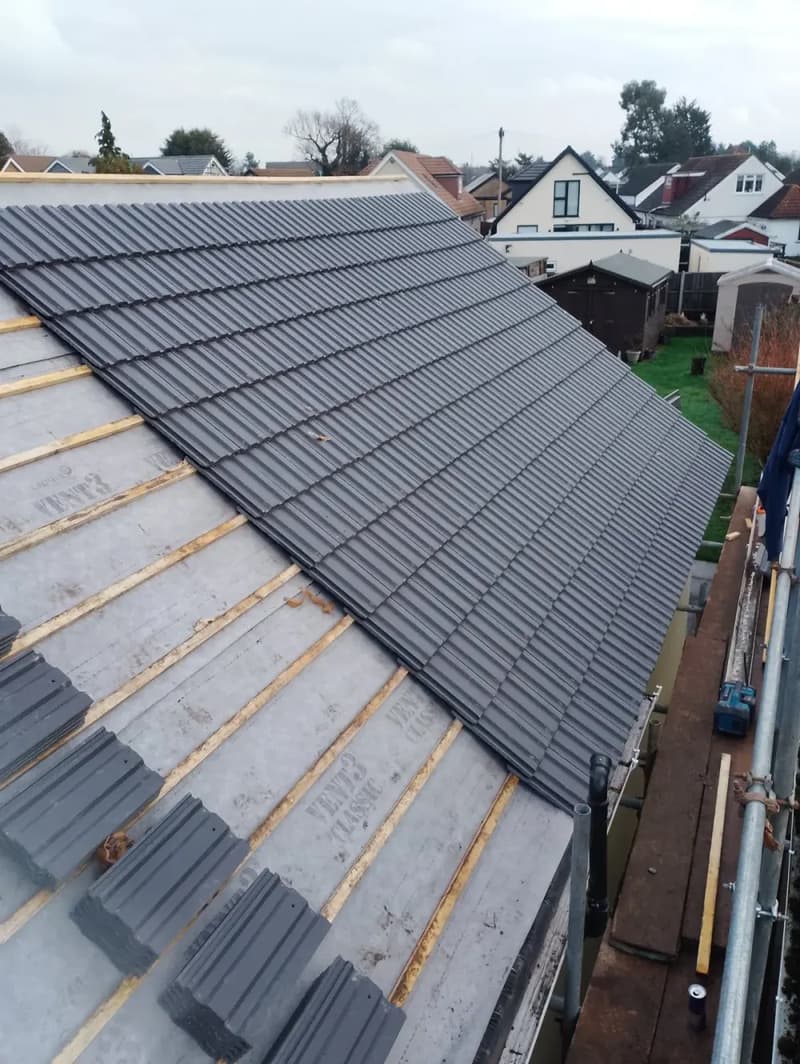
From the street, look for a ridge that drops towards the middle, a slope that bows between supports or tile courses that no longer follow a consistent line. View it from more than one safe ground-level position. Perspective, uneven tiles and neighbouring roof shapes can make a straight roof look distorted.
An older photograph can show whether the shape has changed. Inside a safely accessible loft, bending, displaced joints or staining may add information. Do not lift boards, cut timbers or walk on unsupported ceiling areas.
On a flat roof, a hollow that holds water may suggest a deck or support problem, but inadequate drainage falls can also cause ponding. The difference matters: changing the waterproof covering alone will not straighten a failing support or correct an unsuitable roof level.
Common causes of movement
A replacement covering that is heavier than the original increases the load on the supporting timber. Rafters and purlins that were adequate for one specification may need assessment before carrying another. Concrete tiles are not automatically unsuitable; the actual covering weight and the structure must be considered together.
Water entering over a long period can decay timber at joints, wall bearings or beneath a damaged covering. A rafter end may be affected even if most of its length appears sound. Decay can reduce the support's strength, while wet insulation or stored items can conceal the affected area.
Some roofs have timbers that are undersized for their span, or supports that have been altered during other work. Removed struts and disturbed connections can change how loads reach the walls. Do not move a strut to create storage space: its purpose may not be obvious from its position.
Battens carry the tiles across the rafters. If battens fail locally, the covering can dip without the entire roof frame moving. Distinguishing that local defect from a broader structural problem is important, because the repairs address different layers of the roof.
How serious is it?
A visible dip is a reason to seek advice, not proof that collapse is imminent. Its significance depends on the cause, the condition of the supports and whether the movement is continuing. A longstanding shape still deserves attention if you are planning new coverings or have noticed leaks alongside it.
New distortion, developing cracks or displaced supports should be looked at promptly. Keep away from the affected loft or room if material seems loose or support unstable. Do not climb onto a sagging roof or add stored loads beneath the dip.
If there appears to be an immediate risk to people, stay clear and seek appropriate urgent safety assistance. That is different from arranging ordinary roofing work. Photographs and a record of changes are useful, but they cannot establish that a structure is safe to enter.
What needs checking on a visit
The visible covering and ridge need comparing with the supports beneath them. Relevant points include where the dip begins, the direction of rafters and purlins, their connections and any signs of moisture. Access may limit what can be seen before the covering is opened, so uncertainty should be discussed rather than concealed.
Explain whether the roof has been re-covered, supports removed or leaks noticed. Where stability is in question, a structural engineer may be needed to design a repair. Roofing advice is not a substitute for that calculation.
Local repairs or a re-roof?
A limited area of failed battens or damaged covering may be addressed through roof repairs when the supporting frame is sound. Timber defects need a suitable repair that restores support, not simply a piece added beside the visible dip. Any structural design requirements should be settled before the roofing work is specified.
Where deterioration affects several layers, removing the covering can allow the underlying construction to be dealt with before re-covering. Our new roofs page describes that broader work. A re-roof should address the cause of distortion; it should not be presented as a way to hide an uneven frame.
Leaks and the quotation
If sagging appears alongside damp, the roof leaking causes guide explains possible routes for rainwater. Stopping the leak and assessing damaged timber are related but separate tasks. Drying a previously wet area does not establish that its support has recovered.
Rayner's Roofing offers repair-or-replace advice and a written quotation before work starts. The scope should distinguish covering work from any further structural input required. Read what affects new roof costs, then contact us with the roof's history and the changes you have noticed.
Want a professional to handle it?
Frequently asked questions
Is a sagging roof dangerous?
It can indicate weakened support, but appearance alone does not establish the level of risk. Recent movement or damaged connections need prompt professional attention. Stay clear of areas where the structure or loose materials seem unstable.
Can a sagging roof be fixed without replacing it?
Sometimes the defect is confined to a support, batten or deck area. The extent of deterioration and access to the affected construction determine whether a local repair is practical. Agree the necessary scope in writing.
Why is my ridge line dipping?
Possible reasons include movement in rafters, purlins or their bearings, as well as uneven ridge bedding. Comparing the external shape with the supports below helps distinguish a covering detail from structural movement.
Can heavy concrete tiles cause sagging?
An increase in covering weight can contribute if the supporting frame is not adequate for it. Concrete tiles can also be suitable on a correctly designed roof. The relevant question is the load carried by that particular structure.
Does a sagging flat roof mean it needs replacing?
Not necessarily. A local deck defect differs from widespread deterioration or failing joists. The support, deck and drainage should be considered together before choosing a patch, partial renewal or replacement.
Related services
Covering Staines, Surrey and West London.
More guides
- What does a flat roof replacement cost?
- GRP vs rubber (EPDM) vs felt: which flat roof is best?
- Why is my roof leaking? Common causes and fixes
- How long does a new roof take?
- Dry ridge vs mortar ridge: which is better?
- How much does a new roof cost?
- What does guttering and fascia replacement cost?
- What affects the cost of a roof repair?
- Why is my flat roof leaking?
- Felt roof repair
- Slipped and broken roof tiles
- How much do chimney repairs cost?
- How long does a flat roof last?
- Roof valley repair
- Chimney Leaking? Causes and Fixes
- Do You Need Planning Permission for a New Roof?
- Roof tile types: concrete, clay and slate compared
- Condensation in the loft: causes and fixes
- Garage roof replacement cost: what drives the price
- Rubber roof cost: what decides the price of EPDM
- How long does a roof last?
- Water coming through the ceiling: roof, pipe or condensation?
- Storm damage to a roof: what to do next
- Breathable roof membrane or traditional felt: roof underlay explained
- Is moss bad for my roof? When roof moss matters
- Asbestos garage roof removal cost: what affects the price
- GRP roof cost: what decides the price of a fibreglass roof
- Chimney removal cost: what changes the price
- Gutter overflowing? Causes and how to fix it
- Roof tile replacement cost: what affects the price
- Slate roof cost: what decides the price
- Lead flashing cost: what decides the price
- Flat roof ponding: why water sits and what to do
- Flat roof blistering: causes and when to repair
- Can you claim roof repairs on insurance?
- Felt roof cost: what affects the price