
The short answer
Slate roof cost is driven by the slate you choose, the size and complexity of the roof, how much of the old slate can be reused, the fixing method, the leadwork at chimneys, valleys and walls, and the scaffolding needed. Natural slate generally involves more labour to sort and lay than uniform man-made slate, and a roof with hips, dormers and valleys costs more to slate than a plain double pitch.
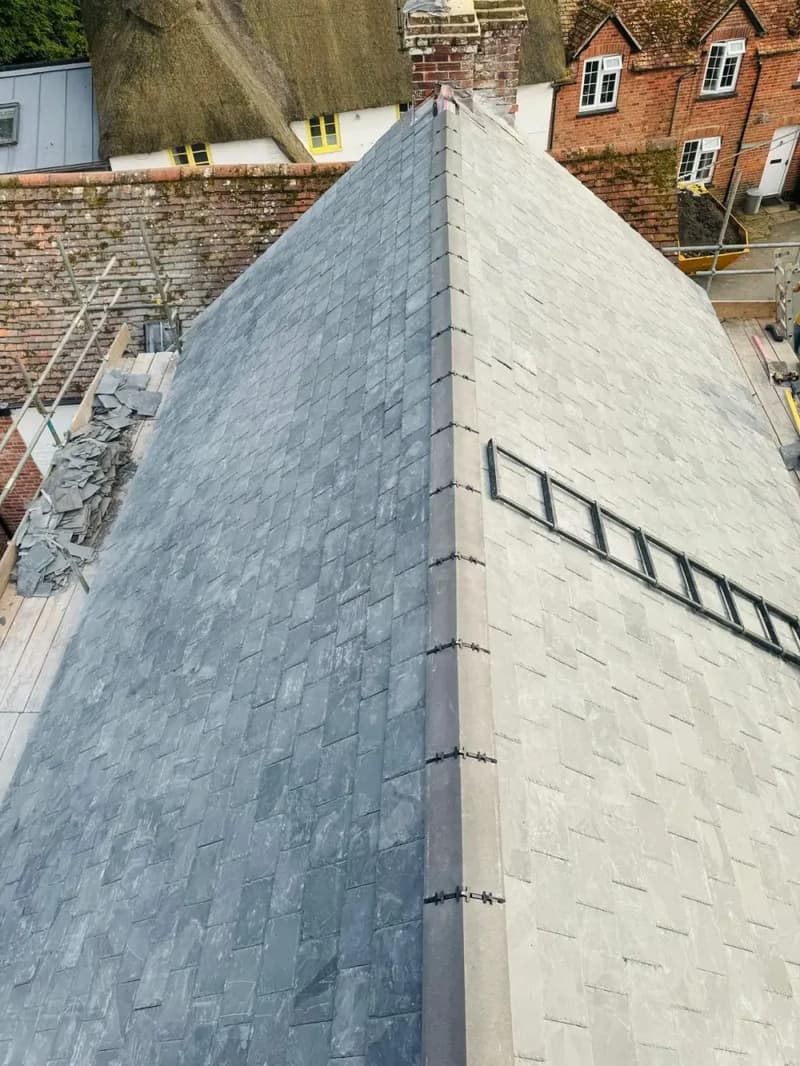
Natural slate and man-made slate
Natural slate varies in thickness, so it is graded and sorted before laying, and holes are punched or drilled to suit. Quality and origin vary widely, and that variation is reflected in material cost. Man-made fibre-cement slates arrive pre-holed in a uniform size and colour, which speeds up laying. Our roof tile types guide compares slate with concrete and clay if you are still choosing a covering.
On some period houses, or in conservation areas, the choice is guided by what is already on the street, which can narrow your options and affect the slate roof price.
The roof itself
The shape and size of the roof affect cost in several ways:
- Area: the number of slates, battens and membrane needed.
- Pitch: slate needs a minimum pitch for its size; low pitches need larger slates and bigger laps.
- Hips and valleys: every cut slate, mitre or lead valley adds time.
- Dormers, rooflights and chimneys: each opening needs cutting in and flashing.
- Verges and ridges: whether they are bedded in mortar or fitted with a dry system.
- Timber: rafters or wallplates found to be weak when the roof is stripped need repair before slating.
Reusing existing slate
Sound old natural slates can often be stripped, sorted and relaid, which cuts the material cost of slate on a re-roof. The trade-off is labour: each slate is checked, cleaned and re-holed, and some will break or prove unsound. Shortfalls are made up with reclaimed slate or new slate on a less visible slope. Whether that saves money depends on how many survive, so it is usually judged once the roof is opened up.
Fixings, membrane and lead
Slates are fixed with copper nails or stainless hooks, on new treated battens over a breathable membrane. The batten gauge is set for the slate size and pitch, and the headlap determines how weathertight the roof is in driving rain. Lead soakers and flashings at chimneys and abutments, and lead valleys where used, add both material and skilled time, and are usually renewed during a re-slate.
Scaffolding to both slopes, a chute or skip for the old material and protection of gardens and neighbouring roofs complete the picture.
Comparing a slate roof with other re-roofs
If you are weighing slate against concrete or clay tiles, the useful comparison is the whole roof, including labour, leadwork, timber and lifespan, not the price per slate. Our new roof cost guide explains what drives re-roofing prices generally. A written quote should state the slate type and origin, the fixing method, whether slates are being reused and what leadwork is included, so quotes can be compared fairly.
Repair or re-slate?
A few slipped or broken slates can be refixed with tingles or hooks, which is a repair rather than a re-roof. When nail fatigue has set in across the slopes, slates slide in many places at once and a full re-slate is usually the better long-term spend. Our slate roof repairs page covers the smaller jobs.
Need it sorted? Book a slate roofing quote
Our slate roofing page explains natural and man-made slate and reusing old slates. Request a quote and we will look at the slopes, the leadwork and the timbers before quoting.
Get a quoteWant a professional to handle it?
Frequently asked questions
How much does a slate roof cost?
It depends on whether you choose natural or man-made slate, the roof size, pitch and shape, how many old slates can be reused, the fixings, the leadwork and scaffolding. A quote after seeing the roof is the reliable answer.
Is natural slate more expensive to lay than man-made slate?
Usually it takes more labour, because natural slates are sorted and holed on site, while man-made slates arrive uniform and pre-holed.
Does reusing my old slates save money?
It can reduce material cost, but stripping, sorting and re-holing takes time and some slates will not be reusable, so the saving varies.
When is slate repair better than a new slate roof?
When only a few slates have slipped or cracked and the battens and fixings elsewhere are sound. Widespread slipping points to a re-slate.
Related services
Covering Staines, Surrey and West London.
More guides
- What does a flat roof replacement cost?
- GRP vs rubber (EPDM) vs felt: which flat roof is best?
- Why is my roof leaking? Common causes and fixes
- How long does a new roof take?
- Dry ridge vs mortar ridge: which is better?
- How much does a new roof cost?
- What does guttering and fascia replacement cost?
- What affects the cost of a roof repair?
- Why is my flat roof leaking?
- Felt roof repair
- Slipped and broken roof tiles
- How much do chimney repairs cost?
- How long does a flat roof last?
- Roof valley repair
- Chimney Leaking? Causes and Fixes
- Do You Need Planning Permission for a New Roof?
- Sagging Roof: Causes and What to Do
- Roof tile types: concrete, clay and slate compared
- Condensation in the loft: causes and fixes
- Garage roof replacement cost: what drives the price
- Rubber roof cost: what decides the price of EPDM
- How long does a roof last?
- Water coming through the ceiling: roof, pipe or condensation?
- Storm damage to a roof: what to do next
- Breathable roof membrane or traditional felt: roof underlay explained
- Is moss bad for my roof? When roof moss matters
- Asbestos garage roof removal cost: what affects the price
- GRP roof cost: what decides the price of a fibreglass roof
- Chimney removal cost: what changes the price
- Gutter overflowing? Causes and how to fix it
- Roof tile replacement cost: what affects the price
- Lead flashing cost: what decides the price
- Flat roof ponding: why water sits and what to do
- Flat roof blistering: causes and when to repair
- Can you claim roof repairs on insurance?
- Felt roof cost: what affects the price