
The short answer
Replacing a roof with a similar covering, without changing its shape or height, usually does not need planning permission in England. Building regulations are a separate matter and may still apply to re-roofing, insulation or structural changes. Before agreeing the work, check the proposal with the local council's planning and building control teams, especially if the building has additional protection.
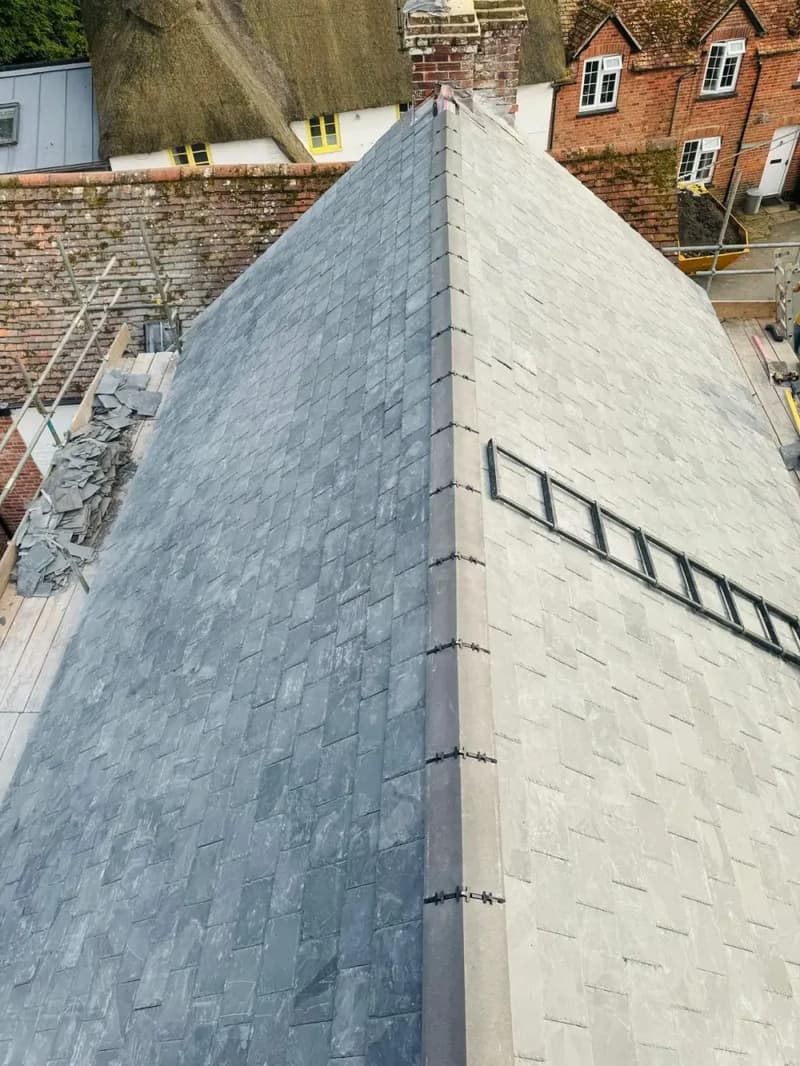
Like-for-like re-roofs
Routine maintenance and re-covering with a similar appearance normally fall outside the need for a planning application. That does not mean every replacement counts as like-for-like. The material, profile and overall appearance matter, as well as whether the roof's outline remains unchanged.
Describe the existing covering and the proposed replacement clearly when asking the council. A photograph and the proposed material are more useful than simply calling it a new roof. Existing planning conditions or restrictions on permitted development can affect what is allowed at a particular property.
This guide gives general guidance for England, rather than a decision on an individual house. Planning permission concerns the development and its appearance. Building regulations concern matters such as safety and energy performance. Receiving an answer about one does not settle the other.
When planning can apply
Raising a ridge, changing the roof shape or adding a dormer is different from replacing the covering on the same structure. Such alterations may need planning permission or may have to meet specific permitted development conditions. Check the actual design before ordering materials or arranging a start.
Conservation areas can have additional controls, including restrictions introduced through an Article 4 direction. Being in a conservation area does not mean every repair needs permission, but it is a reason to check rather than assume. A change in colour or material may be relevant even where the shape stays the same.
Listed buildings have separate listed building consent requirements where work affects their special character. These can cover details that would otherwise seem minor. Ask the council about the building's status and proposed work; permission for an ordinary neighbouring house is not evidence that the same approach applies to yours.
Building regulations, insulation and structure
Replacing a substantial part of a roof can bring the work within building regulations even when planning permission is unnecessary. The requirements depend on what is being renewed and how the roof is constructed. Discuss the extent of the work with building control before treating it as a covering-only job.
A roof above heated rooms is part of the building's thermal envelope. Re-roofing may require insulation improvements, subject to the relevant rules and practical considerations. Insulation, ventilation and moisture control need to work together; packing insulation into an existing space without considering airflow can create a different problem.
Changing the covering can also change the load on rafters, purlins and their supports. The product's actual weight matters, not just whether it is called tile or slate. Where the load or structure changes, competent structural advice may be needed. Building control can explain what information it expects for the proposed construction.
Flat roofs and garage roofs
A replacement flat roof over an extension may involve more than a new waterproof surface. Deck renewal, insulation and altered edge heights can affect the specification. Consider the wall junction, drainage and ventilation alongside any approval requirements. Our flat roofing page explains the roofing work itself.
An unheated detached garage is not necessarily treated in the same way as a roof over living accommodation. Whether a building is exempt and what rules apply depend on its circumstances. Do not assume all garages are exempt, particularly if the space is attached, heated or being changed to another use.
Who to check with
The council's planning team can advise about planning restrictions and whether an application is needed. Its building control team can explain the building regulations route. Give both teams the same description of the proposal, including material changes, insulation and any alteration to the supporting timber.
Keep written replies with the roofing documents. Ask who will submit any application, arrange required checks and retain completion paperwork. An informal conversation is useful for finding the next step, but should not be mistaken for approval where a formal application or consent is required.
The written quotation
Rayner's Roofing provides a written quotation before work starts. When discussing new roofs, ask for the proposed covering and scope to be clear, and establish which approval responsibilities are included or remain with you. Do not assume that a roofing quotation includes council applications or structural design unless those arrangements are expressly agreed.
Resolve approval questions while the proposal can still be adjusted. A change to insulation or support requirements can alter the work being quoted. Our new roof cost guide explains the elements involved in comparing quotations without putting a guessed figure on your roof.
Want a professional to handle it?
Frequently asked questions
Do I need permission to re-tile my roof?
Re-tiling with a similar appearance usually does not require planning permission, but property-specific restrictions can change that. Building regulations may apply separately. Check both questions against the exact proposed work.
Does a new flat roof need building regs?
Renewing a flat roof can involve building regulations, particularly where insulation, a substantial area or the supporting structure is affected. Building control should confirm the requirements for that roof and building.
What if I live in a conservation area?
Ask the planning team whether additional controls apply to your address and material choice. Check listed status as well; conservation area controls and listed building consent are different considerations.
Can I switch from concrete tiles to slate?
Possibly, but check the appearance, pitch, product weight and supporting construction. Planning restrictions and structural requirements should be resolved before a replacement covering is agreed.
Who applies for building control?
The responsibility should be agreed before work begins rather than assumed. Ask who will make any application and arrange checks, and have the agreed scope recorded with the written quotation.
Related services
Covering Staines, Surrey and West London.
More guides
- What does a flat roof replacement cost?
- GRP vs rubber (EPDM) vs felt: which flat roof is best?
- Why is my roof leaking? Common causes and fixes
- How long does a new roof take?
- Dry ridge vs mortar ridge: which is better?
- How much does a new roof cost?
- What does guttering and fascia replacement cost?
- What affects the cost of a roof repair?
- Why is my flat roof leaking?
- Felt roof repair
- Slipped and broken roof tiles
- How much do chimney repairs cost?
- How long does a flat roof last?
- Roof valley repair
- Chimney Leaking? Causes and Fixes
- Sagging Roof: Causes and What to Do
- Roof tile types: concrete, clay and slate compared
- Condensation in the loft: causes and fixes
- Garage roof replacement cost: what drives the price
- Rubber roof cost: what decides the price of EPDM
- How long does a roof last?
- Water coming through the ceiling: roof, pipe or condensation?
- Storm damage to a roof: what to do next
- Breathable roof membrane or traditional felt: roof underlay explained
- Is moss bad for my roof? When roof moss matters
- Asbestos garage roof removal cost: what affects the price
- GRP roof cost: what decides the price of a fibreglass roof
- Chimney removal cost: what changes the price
- Gutter overflowing? Causes and how to fix it
- Roof tile replacement cost: what affects the price
- Slate roof cost: what decides the price
- Lead flashing cost: what decides the price
- Flat roof ponding: why water sits and what to do
- Flat roof blistering: causes and when to repair
- Can you claim roof repairs on insurance?
- Felt roof cost: what affects the price